DCX MAX Compliments Different Types of Aircraft Simulators

There is an increase in the use of aircraft simulator to produce an exact environment to give the learning pilot a real flying experience. The simulators help provide basic as well as advanced training and enhancing the skills of the pilots.

Some of the Different types of flight simulators are:

·         Aviation Training Device

The aviation training device provides pilots with an opportunity to learn and sharpen the basic skills of flying. With the advanced aviation training device (AATD), the pilots get a platform to learn both the procedural as well as operational tasks related to flight training.

·         Full System Simulators

Full flight simulators are the most advanced flight simulator. This simulator replicates every aspect of a real aircraft. With the use of visual systems, the environment of aircraft is also duplicated to give the pilots a real experience.

·         Flight Training Device

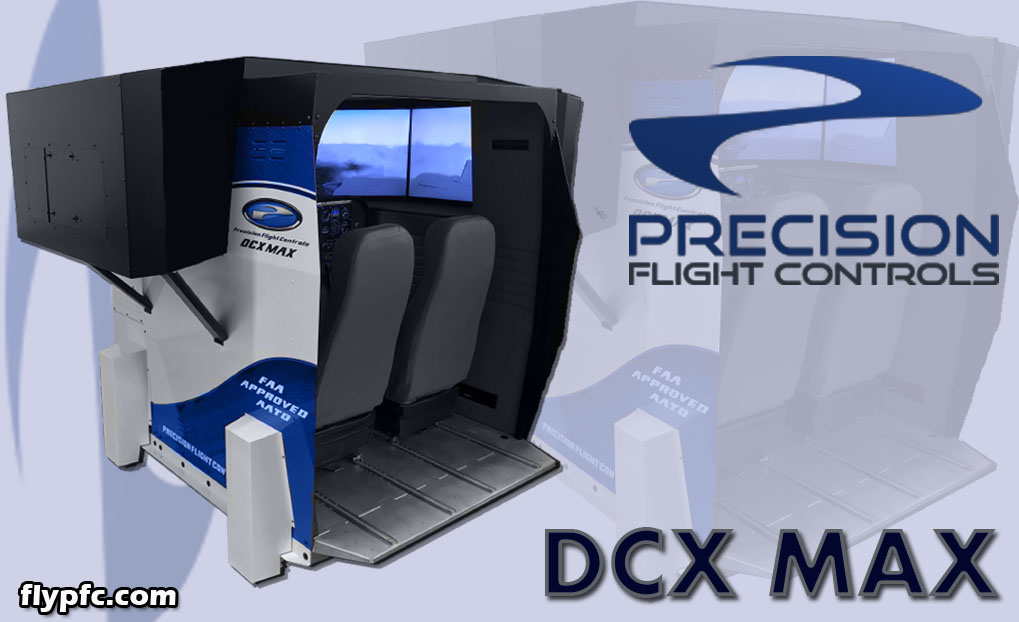
Flight training device is an advanced form of flight simulator. The simulator helps in meeting the technical requirements of flight training. DCX MAX is the latest cockpit system that functions best for full flight simulators and flight training devices.
Application of Aviation Simulators

The flight simulators are not only used for training purposes but have other applications too. Some of the applications of the simulators are:

·         Training

Training is the prime purpose of aviation simulators. Simulators are a safer and cost-effective means of training that ensure the enhancement of the proficiency level of the flight crew.

·         Development

The flight simulators are also used by engineers to test the technical developments of the aircraft. It helps in finding modification requirements to provide better safety to the pilots.

·         Evaluation

Simulators are an effective device for evaluating and validating all the aspects of an aircraft. Starting from the human factors to the procedural developments and equipment, all can be evaluated using the aviation simulators. DCX MAX has enhanced functionality, fidelity, and versatility that offer maximum value to the aviation schools and universities.

CR-12 ProPanel makes Aviation Training Simple

The utilization of real aircraft for aviation training is on a decline. Keeping in view the rapid increase in the cost of fuel, insurance, and maintenance, the aviation industry has adopted simulation devices for flight training. The main aim of using flight simulators is to enhance safety and reduce costs during flight training.

Some of the main benefits of using flight simulators and other training devices are:

·         Better Training

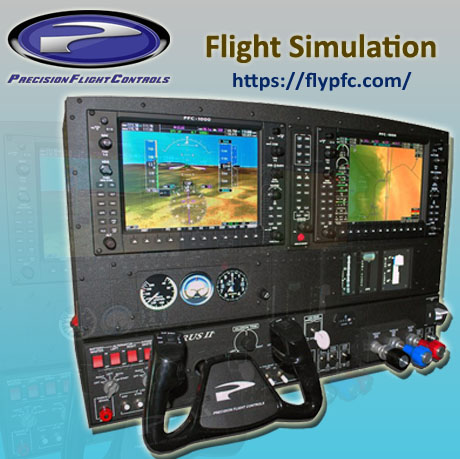
The flight simulators of recent times offer a more realistic approach. With the advanced devices, the pilots are easily able to learn the basics as well as the advanced skills of flying. With the flight simulators designed uniquely for different aircraft, the devices can meet the specific training requirements. CR-12ProPanel is uniquely designed and has exceptional features to meet the requirements of flight training.

·         Risk Mitigation

The flight simulators offer the learning pilots an opportunity to experience the real situation in a cockpit without the risk of life. They can better learn the different ways of handling the risks and emergencies within a flight in a safe environment. Incorporating simulation techniques in the aviation industry helps the pilots to access, identify, and mitigate risks better.

·         Enhance Proficiency

A high level of proficiency is a characteristic of a professional pilot. For the pilots in the training period, gaining proficiency over their skills becomes easy through the simulation techniques and devices. The simulation training allows the pilots to practice effectively and gain a stronger hold on the various skills of handling flights in different situations.

·         Cost Savings

The flight simulators help the aviation industry to get rid of various overhead costs. Providing training with the use of real aircraft requires addition cost on fuel and maintenance. Insurance costs may also arise in emergencies. The use of simulators can cut down all such costs and allows enhanced savings. CR-12 ProPanel is one of the best cost-effective devices that provide better value when used for advanced aviation training.

Get a Glimpse of the Flight Controls and their Operations

An aircraft flight control system is categorized into primary and secondary control systems based on the criticality of their operations. The primary control system includes the ailerons, elevator (or stabilator), and the rudder. These are critical to controlling an aircraft for a safe flight. 

How critical are they? 

Ailerons control the movement, which is called “roll” all along the longitudinal axis of an aircraft and are fixed onto the outboard edge of each wing. These start moving in opposite directions to each other when the autopilot is set, or manual control is made. Large aircraft are fitted with two ailerons on each wing. Both ailerons are activated during slow speed, but for high speed, the outboard aileron is locked, and the inboard aileron becomes operational.

Elevators control flight movement called the “pitch” on the lateral axis of an aircraft. Mostly, two elevators are mounted on the trailing edge of both halves of the horizontal stabilizer. During autopilot or manual control, these move up or down appropriately. 

Next, the rudder controls rotation called the “yaw” on the vertical axis of an aircraft. This is installed on the edge of the fin. It mainly helps to control huge yaw due to turning if one of the engines fail to enable the aircraft to slip.

Let’s have a look at what the secondary control system does to control the aircraft. These include the wing flaps, leading-edge devices, spoilers, and trim systems. These controls help to enhance the performance of the aircraft or to help the pilot curb high control forces.

Flaps are high lift devices that are installed on panels that are fixed on the trailing edge of the wings. When they are stretched, the camber is increased, which in turn causes the chord and surface area of the wing to be extended as well. This enhances both the lift and drag and reduces the stall speed. This helps in a smooth landing and takeoff of the aircraft. 

Spoilers are activated manually by the pilot or in certain cases extended automatically. They increase the drag operation while reducing the lift action. Trim controls the aerodynamic forces on the control surfaces to sustain on the set attitude without any kind of control enforced on it. Though aerodynamic forces influence all axes of rotation, not all types of aircraft can trim all the three axes.

Get trained with the best general aviation simulators to understand the intricacies of flight controls. As this field keeps upgrading day-by-day, the simulators demand to be up to date on the developments. Get real-time experiences with these simulators. 

Conclusion

The General Aviation Training Device is used for pilot screening and selecting, to provide basic flight training, instrument training and spatial disorientation training and above all the flight controls. With numerous models of simulation components in the Fixed Wing and Rotary Wing, Precision Flight Controls stands as the world leader in providing high-quality flight simulation components to industry leaders.

Simulator and Training

The importance of a simulator may not be known to a layman, but a pilot knows the real worth of it. This device gives the pilot a real-time experience and the sessions of learning the practical aspects for completing the course successfully. Here are some key facts for you. Have a look at them!

A system or a device that is a combination of both hardware and software provides the user with a specific type of feeling of being a real pilot. And this is known as ‘Flight simulator.’ It is one of the most reliable and latest devices, which is launched successfully.

The study course which is used to learn to become a pilot of an aircraft is known as ‘Flight training.’ The primary aim of this training program is to provide the required skills of airmanship. There is also a prescribed syllabus, which is appropriately designed keeping in mind the needs and requirements of the specific training program. The flight instructors will further give instructions and have to conduct the training program carefully. After completion of the training program, a pilot certificate is provided. The document is proof that the person has completed the training sessions conducted by the specialist instructors. How does the training program work? Let’s have a look at them!

1. The first one is the training which is provided in the form of a lecture delivered in the classroom by the flight instructors. Here, you get to know the theoretical concept of aeronautical engineering and the students prepare for their oral and written examinations which are necessary to obtain the certificate.

2. The second type of training can be called as the practical one because here the students get a real experience. The entire program is conducted in an aircraft or by using a certified device.

Wrapping

Flight simulator virtually arranges the situations where pilots will face when they fly a real plane. It artificially creates such an environment just for learning purposes. The instruments present inside an airplane, the cockpit area and the actual conditions which are felt in an aircraft are copied and a virtual environment is created using these things. Flight training is just the learning part which includes both theory and practical.

Simulator and Simulation

The aeronautical manufacturers are fully acquainted with these two terms as they are directly related to the workings of the flight. The simulator is the device, whereas simulation is the process which runs when the machine works. So you can say that both the terms correlate with each other.

The device that designs an aircraft artificially and decides the environment, in which it is suitable to fly and used to train the pilots, is known as flight simulator and the person who designs it is called as the ‘Flight Simulator Manufacturer.’

  1. These people basically, work on the equations which are used to fly an aircraft, how the simulators react to the applications of flight control and how the aircraft reacts to the external environmental factors like heavy clouds, winds, thick air, rain, etc.
  2. They are also used for drawing the structure of the aircraft and for controlling various situations arising on the way when the pilots are flying at such heights.
  3. It is a recreation of, and it is used to provide training to the pilots in a virtual environment.
  4. The primary purpose of it is to give a demo session on how to handle the operations of the airplane, without causing any damage to human life and altogether avoiding the risk which is involved in air training.
  5. It ultimately saves the fuel, energy of the pilots as well as time which would have been wasted if the practice would have been provided using a real aircraft.

The two terms Flight simulator and Flight Simulation are generally hard to distinguish and separate. The work of both things is almost the same. So you can say that flight simulation is used for several reasons, which includes pilots’ flight training, the designing and the development work of the aircraft and to conduct thorough research on the various features of aircraft and its controlling techniques.

Wrapping

The respective systems are used to record the experience that is how the user feels like. But the only problem is that the pilots cannot come across the actual fear and those feelings which that will take place in a real flight.

Aviation Training

The specialists arrange training programs for airlines and private persons which includes Airbus, Boeing, and Dornier, etc. Their experienced faculties are providing high standard training. So that people can achieve their target or goal in a specified time limit.

Today’s technological world has come up with the latest devices to provide training in the field of aviation, and one among them is the ‘Advanced Aviation Training Device,’ is a special type of training device which is used to train the pilots efficiently and effectively. This device makes the training program a cost-effective one, as well as the process doesn’t go too long, and it’s completed within a short period. Highly qualified instructors are being appointed by the organization to operate the device in the best manner possible.

The high training is performed using one more device named ‘Flight Training Device(s).‘ This Equipment covers the entire requirements which are essential to provide a high level of training. Pocket-friendly solutions are available. It comes with a variety of options to choose from, whichever is convenient according to the needs and requirements of the training program. The hardware of the device is designed in such a manner that it’s reliable. It gives the feel of a real aircraft.

Moreover, to add on to the experience, it is further developed by purely electrical flight control, and seems realistic. The sound system and the visual display systems are just perfect for providing signs on the weather conditions like day, night, fog, clouds, etc. The training program is useful for pilots when they learn to use a fully automated flight system. And they also learn the management and decision making the part which they are going to undertake in emergency or unusual situations.

Wrapping

These two devices have generally taken the training program to reach its highest peak in no time. It has made the works more comfortable and faster while increasing the efficiency level of the training programs.

A Guide on Flight Simulation Training Devices

Are you are a technology geek curious to know all about devices that are used in flight simulation training? You must go head reading to fill your craving. In the aeronautical industry, there are so many things that are fascinating for technology lovers. Each one is complex and requires an extreme depth of knowledge to be completely understood.

To test an aircraft, flight simulation and training devices recreate aircraft flight and also the environments in which the aircraft flies. Aircraft are tested in the extreme condition of weather like a storm, lightning, engine fire, landing gear malfunctioning, etc. It is important to understand the performance of the aircraft in normal and abnormal conditions. It is done basically for pilot training purposes.

Flight simulation and training devices (FSTDs)

  • Full Flight Simulators (FFSs):

They require a motion platform or a visual system. It is used for sharpening skills with a CRM, electronic flight management system and advanced aeronautical decision-making systems.

  • Flight Training Devices (FTDs):

Flight Training Device(s) do not require a motion platform or a visual system. They are used to train student pilots to the specialized skills and environment that they will encounter in commercial aviation. Some of these devices also can check the performance of a generic aircraft in a realistic flight environment. Some of them can also feature a panoramic 220-degree display system. They also enable students to practice approach and landing procedures safely. They can confidently deal with steady crosswinds and gusts with the help of these devices.

There are many flight simulator manufacturer available hp deals with the production and manufacturing of these types of devices. They prove to be a great help for the student pilots who can get realistic experience while they work on simulators. You can choose any one of them as per your requirement so that your students can learn safely how to be a good pilot even in extreme conditions which do not favor flight of an aircraft.

Benefits Associated with Simulation in Flight Training

If you want to be a pilot and make a successful career in aviation, you can go for training through flight simulators to optimize your learning. Here are the benefits of such Flight Training.

  1. Safer:

Safety is the biggest concern when it comes to flying an aircraft. If you can learn to fly the aircraft while being safe what else you need. This is not only good for beginners but also for experienced ones. It is because you can practice emergency situation from the safety of the ground.

  • More Attempts:

While you practice flight in simulators, you can always go for more attempts. Here you do not need to worry about the consequences so, you can try different aspects of flight with confidence. It cannot be possible in a real-time flight experience in an aircraft.

  • Tricky Conditions:

Flying an aircraft needs you to operate it on all kinds of weather conditions like rain, snow, thunder, lightning, storm or conditions like engines failure or landing gear, malfunctioning. The flight simulator manufacturer create such weather conditions that you will have to encounter these real-time events. And, the simulators also want the pilots to react accordingly.

  • Flexibility of Time:

If you take training directly on an airplane, some limits deprive you to practice flying. These limits are weather and light which affects the flight of an aircraft. With flight simulation, you can practice at any time regardless of the weather conditions. So, it gives you the flexibility of time.

  • More Learning:

According to a research, one hour of flight simulation training is having same worth as two hours in an airplane. So, you can learn more things in less time which can result in cost efficient for you.

  • Raising Confidence:

Flight simulation creates such a scenario like second nature to make you practice the real-time conditions in an aircraft’s cockpit which you can learn over and over again until you are confident. This you certainly cannot do in real aircraft.

How Avoid Mistakes with Flight Simulators?

The world is going through a rapid change in terms of technological advancements. Now, fully featured airplane flight simulators are available which can recreate aircraft flight and different aspects of flight environment. They are used for many reasons like flight training and research on aircraft characteristic and performance. Here are some things that need to be considered while you are going for a flight simulator.

1. Computing Power:

This is one of the primary aspects that must be taken into consideration because the simulator must match the specification of your computer. The simulators demand a high Random Access Memory (RAM) of a computer. So, you must ensure your computer must have a high RAM to make it compatible with a simulator. You must carefully investigate the requirements of the simulator.

2. Expand-ability:

You must investigate whether the simulator is expandable to external controls or not. It must accommodate a large number of control inputs like joysticks, yokes, throttle controls, and rudder pedals. Modern simulators come with USB inputs so that you should not struggle for configuring specific control device. So, you must have to check whether the manufacturer recommends a certain brand of control input or not.

3. Regular Software updates:

Regular updates must be available for the flight simulator so that you can play with the features like traffic control voicing, weather phenomenon, etc. You should not purchase a one that has been dropped by the manufacturer. Make sure you buy the best simulator for undisturbed flight simulation.

Hence, an airplane simulator can be proved to be a great source for flying knowledge. Choose a simulator that is compatible with your computer to use the various features available and check various technical requirements. Many of them have instructor operating stations to create various environmental conditions in the simulator like an engine fire, landing gear malfunctioning, storm, lightning, etc. So, choose the one that meets your requirements.

Want to know how flight simulators work? Here’s all you need to know!

Manufacturing of flight simulators

A process of making goods by involving components, raw materials on a large scale with operations divided among various workers in different fields is manufacturing. The goods which are produced are the manufactured product by a particular company who are the manufacturers. The goods are later given to the consumer through various means. 

How flight simulators work?

Flight simulators work on the basics laws of physics. Most of the games nowadays use this but simulators take this even more seriously as they want to give the players a very realistic experience of being a pilot in a wide variety of aircrafts without buying a plane or paying for flying lessons. Flying simulators involve aerodynamics and generally are a real aircraft’s weight. 

How flight control works? 

Flight controls is around 3 axes of space. They are called as pitch. When the pilot moves his side stick, which depends on the aircraft, the hydraulic fluid moves the surface on the wings as well as the tail. When the pilot does this, air is deflected in a specific direction. According to Newton’s law, every action performed results in an equal and opposite reaction. So, the air is pushed in a specific direction which makes the aircraft go the other way. 

Flight simulator manufacturers 

There are several manufacturers for training simulator devices FTD, FNTP, Full Flight Simulators used for military and commercial training. Various companies engineer simulators used by aerospace manufacturers to create awareness of any kind of situation, cockpit training and pilot training simulations. Manufactures may include system D aviation training flight simulators, IFR, JOT, MPL and many more.