DCX MAX Compliments Different Types of Aircraft Simulators

There is an increase in the use of aircraft simulator to produce an exact environment to give the learning pilot a real flying experience. The simulators help provide basic as well as advanced training and enhancing the skills of the pilots.

Some of the Different types of flight simulators are:

·         Aviation Training Device

The aviation training device provides pilots with an opportunity to learn and sharpen the basic skills of flying. With the advanced aviation training device (AATD), the pilots get a platform to learn both the procedural as well as operational tasks related to flight training.

·         Full System Simulators

Full flight simulators are the most advanced flight simulator. This simulator replicates every aspect of a real aircraft. With the use of visual systems, the environment of aircraft is also duplicated to give the pilots a real experience.

·         Flight Training Device

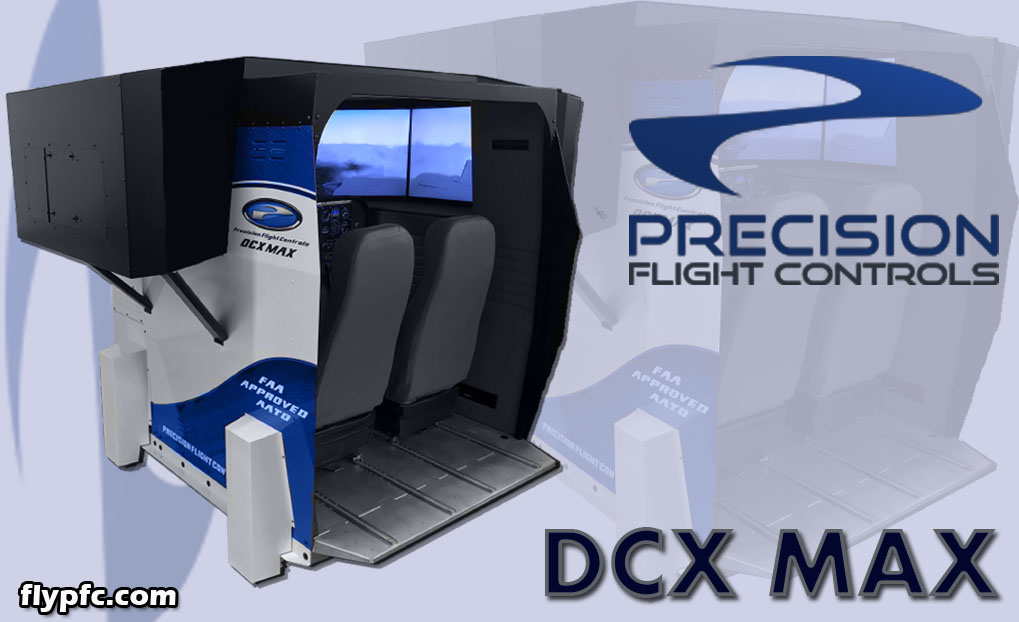
Flight training device is an advanced form of flight simulator. The simulator helps in meeting the technical requirements of flight training. DCX MAX is the latest cockpit system that functions best for full flight simulators and flight training devices.
Application of Aviation Simulators

The flight simulators are not only used for training purposes but have other applications too. Some of the applications of the simulators are:

·         Training

Training is the prime purpose of aviation simulators. Simulators are a safer and cost-effective means of training that ensure the enhancement of the proficiency level of the flight crew.

·         Development

The flight simulators are also used by engineers to test the technical developments of the aircraft. It helps in finding modification requirements to provide better safety to the pilots.

·         Evaluation

Simulators are an effective device for evaluating and validating all the aspects of an aircraft. Starting from the human factors to the procedural developments and equipment, all can be evaluated using the aviation simulators. DCX MAX has enhanced functionality, fidelity, and versatility that offer maximum value to the aviation schools and universities.

CR-12 ProPanel makes Aviation Training Simple

The utilization of real aircraft for aviation training is on a decline. Keeping in view the rapid increase in the cost of fuel, insurance, and maintenance, the aviation industry has adopted simulation devices for flight training. The main aim of using flight simulators is to enhance safety and reduce costs during flight training.

Some of the main benefits of using flight simulators and other training devices are:

·         Better Training

The flight simulators of recent times offer a more realistic approach. With the advanced devices, the pilots are easily able to learn the basics as well as the advanced skills of flying. With the flight simulators designed uniquely for different aircraft, the devices can meet the specific training requirements. CR-12ProPanel is uniquely designed and has exceptional features to meet the requirements of flight training.

·         Risk Mitigation

The flight simulators offer the learning pilots an opportunity to experience the real situation in a cockpit without the risk of life. They can better learn the different ways of handling the risks and emergencies within a flight in a safe environment. Incorporating simulation techniques in the aviation industry helps the pilots to access, identify, and mitigate risks better.

·         Enhance Proficiency

A high level of proficiency is a characteristic of a professional pilot. For the pilots in the training period, gaining proficiency over their skills becomes easy through the simulation techniques and devices. The simulation training allows the pilots to practice effectively and gain a stronger hold on the various skills of handling flights in different situations.

·         Cost Savings

The flight simulators help the aviation industry to get rid of various overhead costs. Providing training with the use of real aircraft requires addition cost on fuel and maintenance. Insurance costs may also arise in emergencies. The use of simulators can cut down all such costs and allows enhanced savings. CR-12 ProPanel is one of the best cost-effective devices that provide better value when used for advanced aviation training.

Get a Glimpse of the Flight Controls and their Operations

An aircraft flight control system is categorized into primary and secondary control systems based on the criticality of their operations. The primary control system includes the ailerons, elevator (or stabilator), and the rudder. These are critical to controlling an aircraft for a safe flight. 

How critical are they? 

Ailerons control the movement, which is called “roll” all along the longitudinal axis of an aircraft and are fixed onto the outboard edge of each wing. These start moving in opposite directions to each other when the autopilot is set, or manual control is made. Large aircraft are fitted with two ailerons on each wing. Both ailerons are activated during slow speed, but for high speed, the outboard aileron is locked, and the inboard aileron becomes operational.

Elevators control flight movement called the “pitch” on the lateral axis of an aircraft. Mostly, two elevators are mounted on the trailing edge of both halves of the horizontal stabilizer. During autopilot or manual control, these move up or down appropriately. 

Next, the rudder controls rotation called the “yaw” on the vertical axis of an aircraft. This is installed on the edge of the fin. It mainly helps to control huge yaw due to turning if one of the engines fail to enable the aircraft to slip.

Let’s have a look at what the secondary control system does to control the aircraft. These include the wing flaps, leading-edge devices, spoilers, and trim systems. These controls help to enhance the performance of the aircraft or to help the pilot curb high control forces.

Flaps are high lift devices that are installed on panels that are fixed on the trailing edge of the wings. When they are stretched, the camber is increased, which in turn causes the chord and surface area of the wing to be extended as well. This enhances both the lift and drag and reduces the stall speed. This helps in a smooth landing and takeoff of the aircraft. 

Spoilers are activated manually by the pilot or in certain cases extended automatically. They increase the drag operation while reducing the lift action. Trim controls the aerodynamic forces on the control surfaces to sustain on the set attitude without any kind of control enforced on it. Though aerodynamic forces influence all axes of rotation, not all types of aircraft can trim all the three axes.

Get trained with the best general aviation simulators to understand the intricacies of flight controls. As this field keeps upgrading day-by-day, the simulators demand to be up to date on the developments. Get real-time experiences with these simulators. 

Conclusion

The General Aviation Training Device is used for pilot screening and selecting, to provide basic flight training, instrument training and spatial disorientation training and above all the flight controls. With numerous models of simulation components in the Fixed Wing and Rotary Wing, Precision Flight Controls stands as the world leader in providing high-quality flight simulation components to industry leaders.

Want to know how flight simulators work? Here’s all you need to know!

Manufacturing of flight simulators

A process of making goods by involving components, raw materials on a large scale with operations divided among various workers in different fields is manufacturing. The goods which are produced are the manufactured product by a particular company who are the manufacturers. The goods are later given to the consumer through various means. 

How flight simulators work?

Flight simulators work on the basics laws of physics. Most of the games nowadays use this but simulators take this even more seriously as they want to give the players a very realistic experience of being a pilot in a wide variety of aircrafts without buying a plane or paying for flying lessons. Flying simulators involve aerodynamics and generally are a real aircraft’s weight. 

How flight control works? 

Flight controls is around 3 axes of space. They are called as pitch. When the pilot moves his side stick, which depends on the aircraft, the hydraulic fluid moves the surface on the wings as well as the tail. When the pilot does this, air is deflected in a specific direction. According to Newton’s law, every action performed results in an equal and opposite reaction. So, the air is pushed in a specific direction which makes the aircraft go the other way. 

Flight simulator manufacturers 

There are several manufacturers for training simulator devices FTD, FNTP, Full Flight Simulators used for military and commercial training. Various companies engineer simulators used by aerospace manufacturers to create awareness of any kind of situation, cockpit training and pilot training simulations. Manufactures may include system D aviation training flight simulators, IFR, JOT, MPL and many more.

All about advanced flight training devices and techniques!

The three types of simulators include Aviation training device, Fixed Base and Full Base simulators. These levels have different grades of certification, and the names determine the level of certification and the difficulty level of the design. 

Aviation Training Device

There are Basic and Advanced Aviation training device (ATD). These are a set of computers, which is a replica of the aircraft instruments, equipment panels, and controls of an open flight deck or the cockpit.The Basic ATD is a platform for procedural and operational training appropriate for pilot time and instruments. The Advanced ATD trains pilots on ground and flight tasks and procedures. The certifications are called FAA with two different modes, namely: A and B.

Fixed Base Simulators

Fixed Base simulators has an open cockpit including all control panels, interior linings, out shell, and flight controls equipped with visuals and sounds operated by the instructor.These simulators provide a professional flight training. The FAA recognizes 4 levels, namely: 4,5,6 and 7. Level 4 and 7 is for helicopter simulators. The EASA recognizes 3 levels, namely: 1,2 and 3. Level 3 is for helicopters only. These simulators are used for training the copilot and captain to work together and use the microphones. 

Full Flight Simulators

Full Flight Simulator is the highest level of training device. There are totally four levels of certification for FAA as well as EASA which are A, B, C and D with different requirements. This is the last step before the pilot gets to sit in a real aircraft as well as being used for the recurrent training for pilots. Training focuses on malfunctions, bad weather, uncommon procedures and many more things that cannot be tried in the real aircraft with passengers.

All you need to know about Flight Simulators!

Flight simulator is a virtual realistic system, which simulates the flying machine. It is a computer- generated design of the airplane cockpit and is an exact replica of the pilot view and the aircraft motion. This is mostly used to train pilots or for research or gaming. 

How do flight simulators help in training?

During an accident while in the air, the pilots feel a lot of pressure, as they need to consider the safety of people on board. Their next step of actions is critical and determines the safety and helps to avoid a tragedy. Hence, all pilots undergo intense training in a flight simulator before they become a full-time pilot. Their training lasts for long hours to understand and become aware of all possible solutions to handle situations including bad weather, engine failure, and other dangers.

Types of Simulators

There are 3 types of simulators such as Aviation Training Device, Fixed Base and Full Base Simulators. Aviation training device provides a pilot platform to learn basic skills, which helps to acquire a private pilot license.The fixed base is classified under 4 different levels ranging from Level 1 to Level 4. They do not move and are the most sophisticated device. This training is about aviation, navigation, landing, and procedures for flight management. Full base simulators are also categorized under 4 different levels ranging from A-D and possess motion system.

Retrospection of pilot training

During their tenure as full-time pilots, every year there is a retrospection of skills. Hence, simulators are used again to test pilots for their skills under varying situations. This also helps them to enhance their skills wherever lagging and become more professional. Flight simulation plays a key role and helps a great deal in career advancement for pilots.